
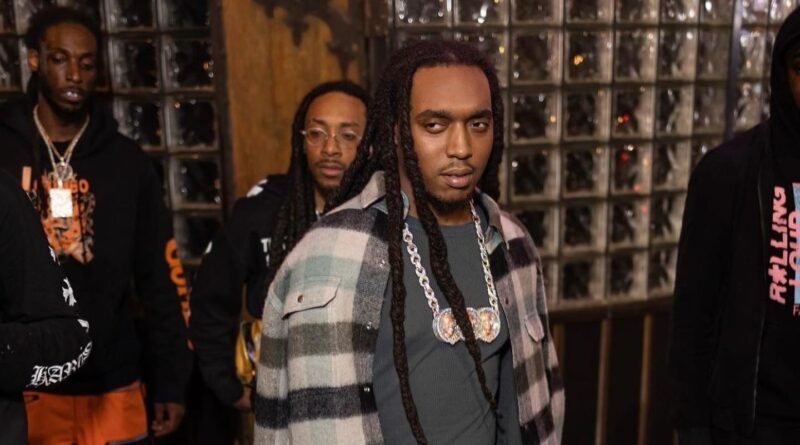
Takeoff Murder Trial Delayed to April 2027 — Justice, and a Legacy, Still Waiting
The trial in the killing of Takeoff, which had been scheduled to begin today, has been postponed until April 2027. Scheduling conflicts on both sides, along with a new release of evidence, pushed the start of proceedings back by months — another delay in a case that has already asked a family, a city and a culture to wait a long time for answers.
Takeoff, born Kirshnik Khari Ball, was 28 when he was killed in Houston on November 1, 2022. He was the youngest member of Migos, the Atlanta trio he formed with his uncle Quavo and his cousin Offset, and within the group he was widely regarded as the most technically gifted rapper — the one whose verses other rappers studied, and whose quiet, unshowy presence balanced the group’s louder energy. His death, in the early hours of the morning after a private gathering, sent shockwaves through hip-hop that have not fully faded.
The delay itself has a human cost that is easy to lose in the language of scheduling. For Takeoff’s family and loved ones, every postponement means more months without a verdict, more months of living with a loss that the legal system has not yet addressed. For the people who knew him, the wait is not abstract. It is time — time that keeps passing while the case that should bring some measure of closure sits on a calendar.
That is also why the case matters beyond the courtroom. Migos did not just make hit records. With their triplet flows, ad-libs and fashion, they reshaped the sound of rap in the 2010s, and their influence can be heard in nearly every corner of the genre that followed, from Atlanta to the rest of the world. Songs like “Versace,” “Bad and Boujee” and the Culture albums are not just a catalogue; they are part of the architecture of modern hip-hop. Takeoff’s verse, his cadence, his ear — those are woven into that architecture, and they will outlast this trial whatever its outcome.
The new evidence release that contributed to the delay is a reminder that the case is still being built, even four years after his death. Prosecutions of this kind move slowly by design, and delays are often a sign that both sides are working through material that could shape the trial rather than a sign that nothing is happening. But the months will still feel long, and the frustration of fans who have waited years for a resolution is understandable — even as the process takes the time it needs to be fair.
For now, the date to hold is April 2027. Until then, Takeoff’s legacy is not in a courtroom. It is in the music, in the artists he influenced, and in the memory of a rapper who never needed the spotlight to be heard. The trial will come. What matters most is that when it does, it is conducted with the care his life deserved — and that his family, and the culture he helped define, finally get the answers they have been waiting for.