
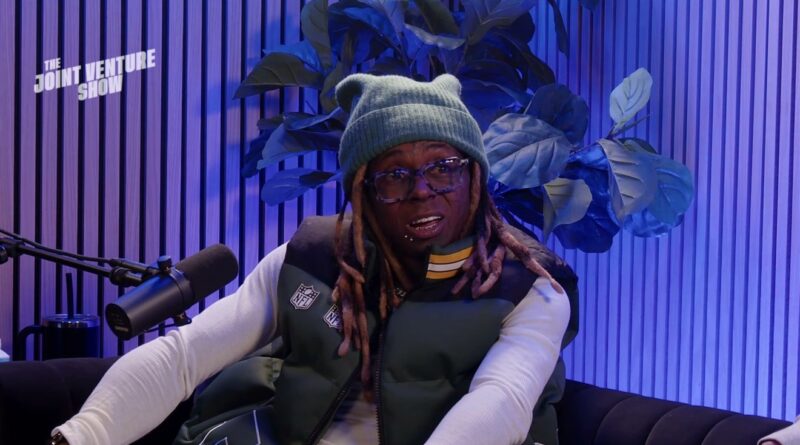
Lil Wayne Says He Pushed Drake to Sing Whole Songs
Lil Wayne has told the story before in pieces, but he put the sharpest version of it on the record this week. On episode 16 of The Joint Venture Show — the podcast Wayne co-hosts with Craig Carton, with Nick Cannon as the guest — Wayne went back to the Young Money days and explained, in detail, how hard it was to get a young Drake to do the thing that would later define him: sing.
Start with the era Wayne came up in, because the rule was real. “If you were a rapper, you bet not sing,” Wayne said. He had the ability himself — by his second album, he says, he had already started singing — but the culture demanded bars and nothing else. “I bet not have no melody,” he recalled. “I better have just straight bars. So I downplayed all my musical ability.”
Drake walked into that same culture, and at first he played by its rules. “You know how hard it was to get this n***a Drake to sing?” Wayne asked. “He refused.” When Drake did sing, he kept it to hooks — and Wayne would shut it down mid-playback. “Bro, I’m sorry, I don’t even want to hear it. Stop. I don’t want to hear no more,” Wayne said, re-enacting it. “Bro, you can fucking sing for real. Like, I wish I had that. Stop trying to sing on just a hook. You about to sing a whole fucking song.” The table’s verdict was instant: “That’s great advice.”
Cannon’s seat at that table is its own piece of hip hop history. Before Young Money, Drake was Aubrey Graham from Degrassi — and Cannon was, in his words, “the chairman of the TeenNick that Degrassi aired on,” with Drake in the building and people telling Cannon the kid did music. Cannon says he deliberately never pushed Drake to sign with him: being tagged “the next Will Smith” through his Nickelodeon association had cost his own music credibility, and he didn’t want that weight on a young artist who wanted to be accepted in the streets. “Somebody like Wayne could take him to a whole another level,” Cannon said — and he remembers having exactly that vision at the time.
The pipeline ran through family, too. Cannon noted Drake was brought to them by Jazz Prince of Rap-A-Lot — “my little brother,” Cannon called him — out of the same Houston rooms that produced the Geto Boys and Scarface. And as one of the hosts put it, the pattern rhymed with another Wayne development story: “Like the Nicki story, you wanted to find a New York voice. But Drake, they came to you with Drake.” Wayne’s gift, in both cases, was hearing what the artist was holding back.
History graded the homework. The singing Drake resisted became the most imitated sound in rap — full sung verses, whole sung songs, a generation of melodic rappers who never had to ask permission. Which makes Wayne’s frustration the truest part of the story: the man who broke the “rappers bet not sing” rule for Drake had spent his own early career obeying it. The mentor had to unlearn the rule before he could teach it.